Blog

  • From Retention to LTV: How Embedded Rewards are Transforming Game Studios KPIs

    From Retention to LTV: How Embedded Rewards are Transforming Game Studios KPIs

    For years, mobile game growth followed a familiar model: acquire users, retain them, and then monetize through ads or in-app purchases. 

    Now that model is becoming harder to sustain. Installs across many genres have plateaued, user acquisition costs are rising, and studios are competing for a limited amount of player attention (and spend). Success increasingly relies on what happens after a user installs the game; how long they’re retained and how deeply they engage over time. 

    As a result, studios are looking more closely at how to increase user lifetime value (LTV). When players show loyalty through continued engagement, existing monetization systems perform better as well. 

    Embedded rewards, like those powered by ZBD Earn, are one approach that has shown consistent results across all these areas to help drive growth.

    How embedded rewards work

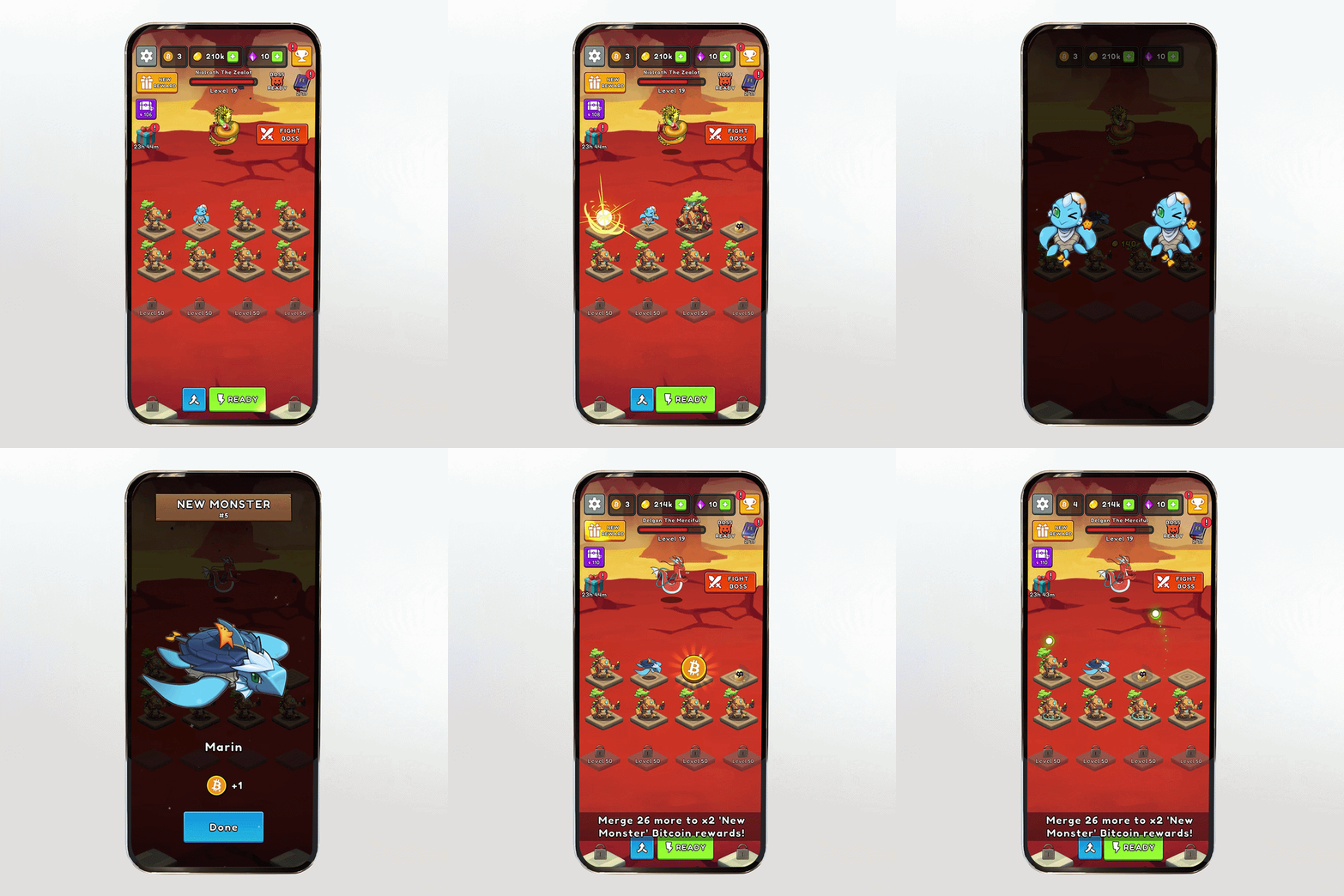
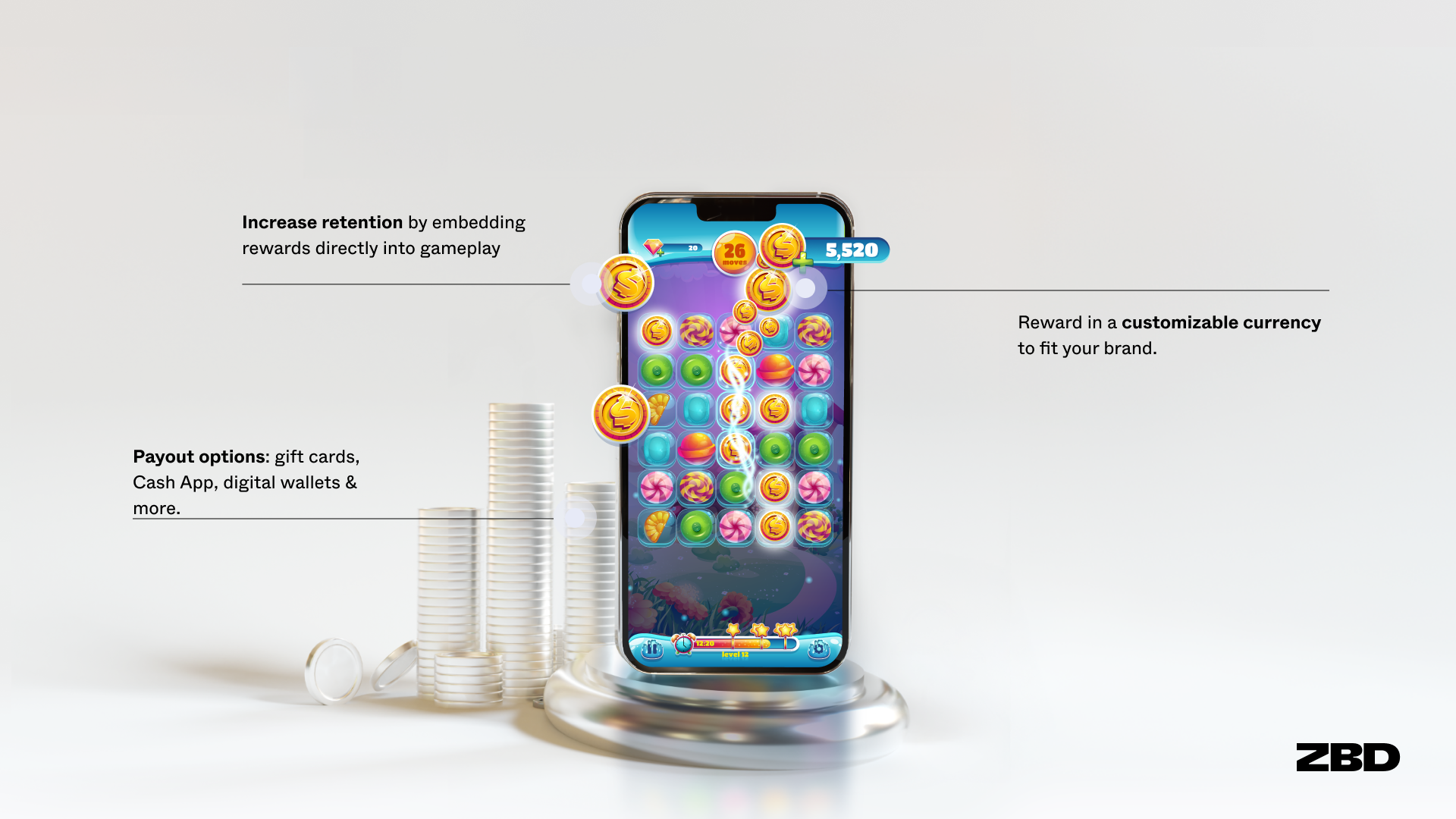
    ZBD Earn adds real-money rewards directly into the game. They are embedded in the game’s UI, tied directly to progression, and payouts are handled in-game instead of through external tools or platforms. This makes rewards feel like a natural part of the gameplay experience, rather than layered on top like offerwalls or reward apps. 

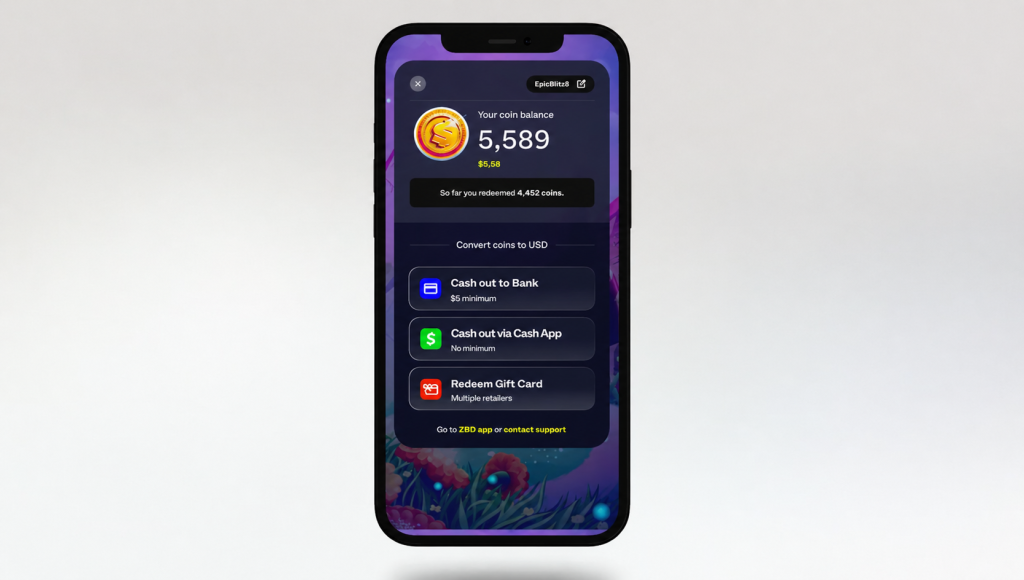
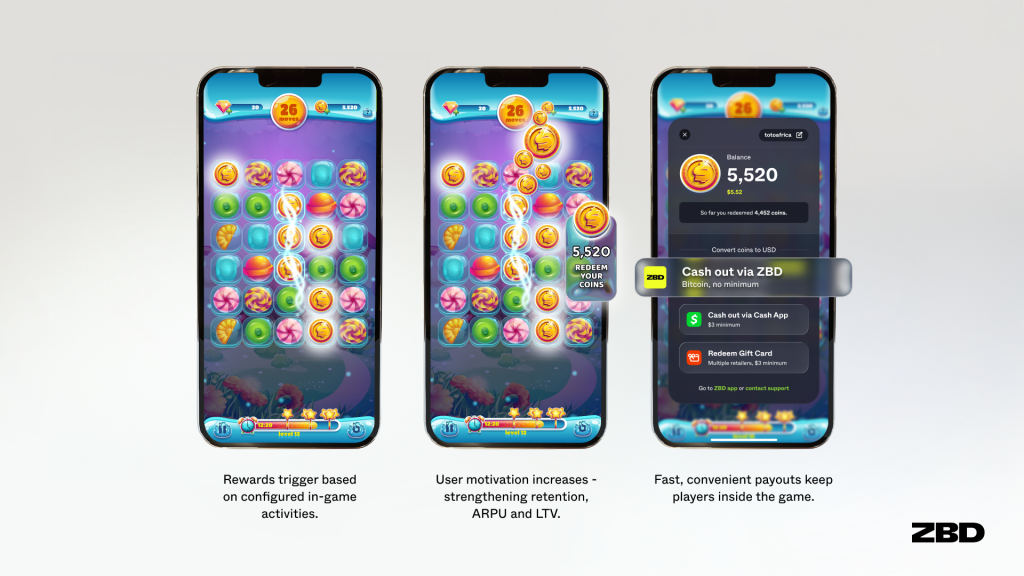
    Here’s an example of how it works: 

    The more users play, the more rewards they earn. 

    Rewards are always tied to gameplay mechanics and actions to ensure users earn them by progressing through the game, not just for showing up. That includes completing first-time user experience progression, milestones, challenges, and more. But one of the most important capabilities: embedded rewards give studios configurability options. They can tailor rewards across different user segments based on acquisition source, engagement patterns, retention stage, or monetization behavior.  

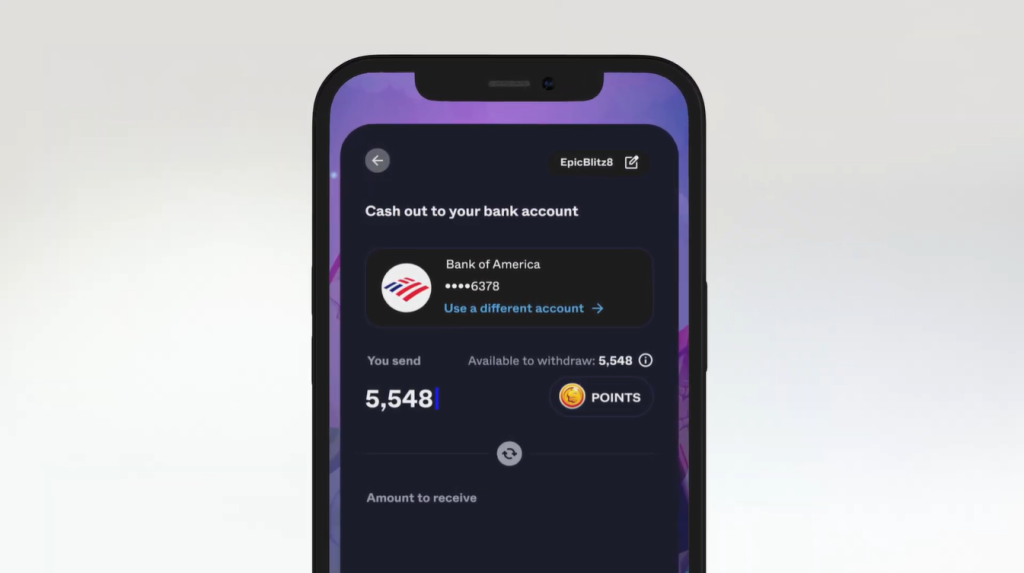
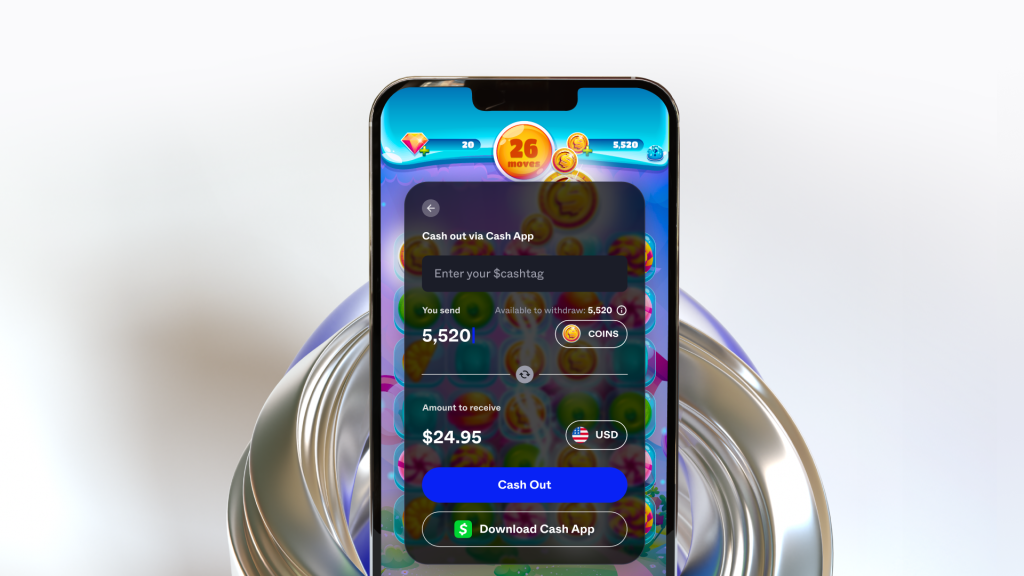
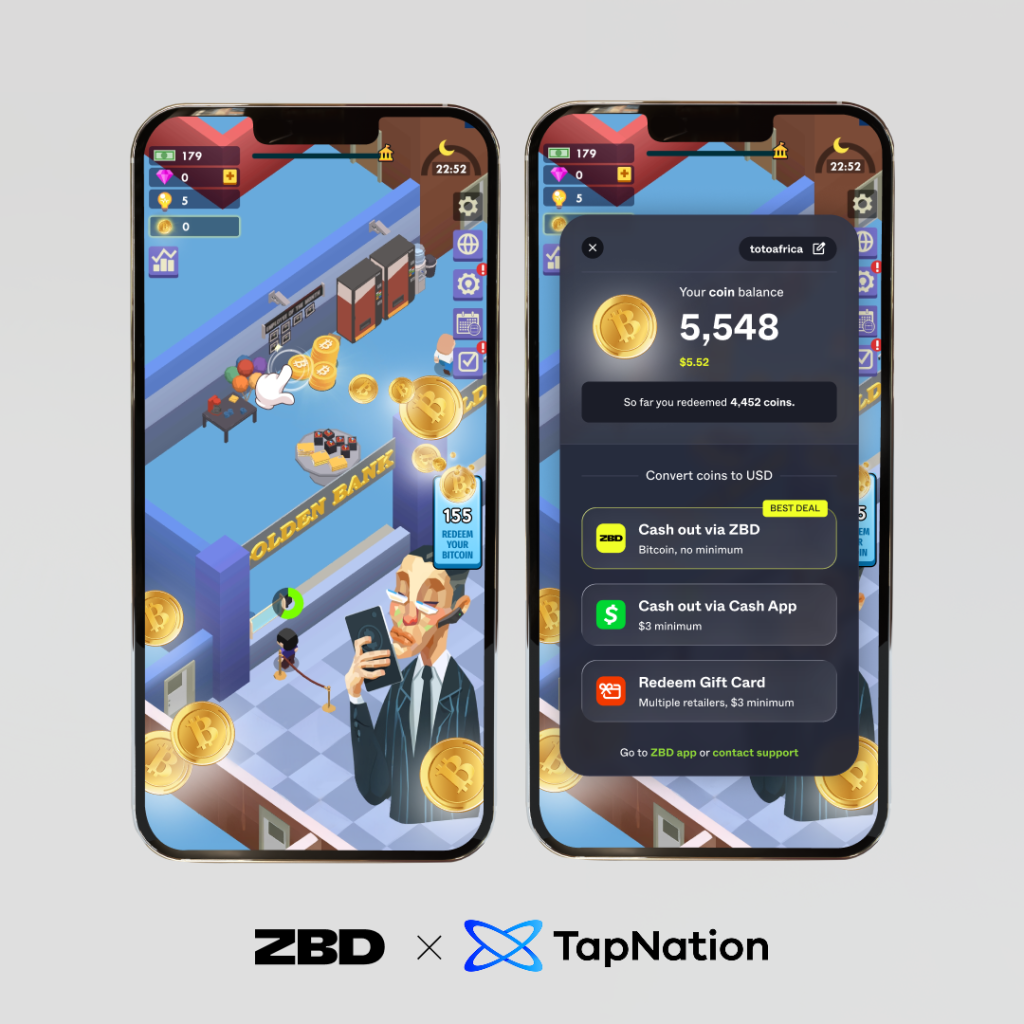
    Once users earn rewards, they can withdraw them through the in-game cash-out flow, connecting gameplay progress with real-world value. Read more about how ZBD Earn works. 

    Users can quickly and easily cash out their earnings.

    Retention moves first

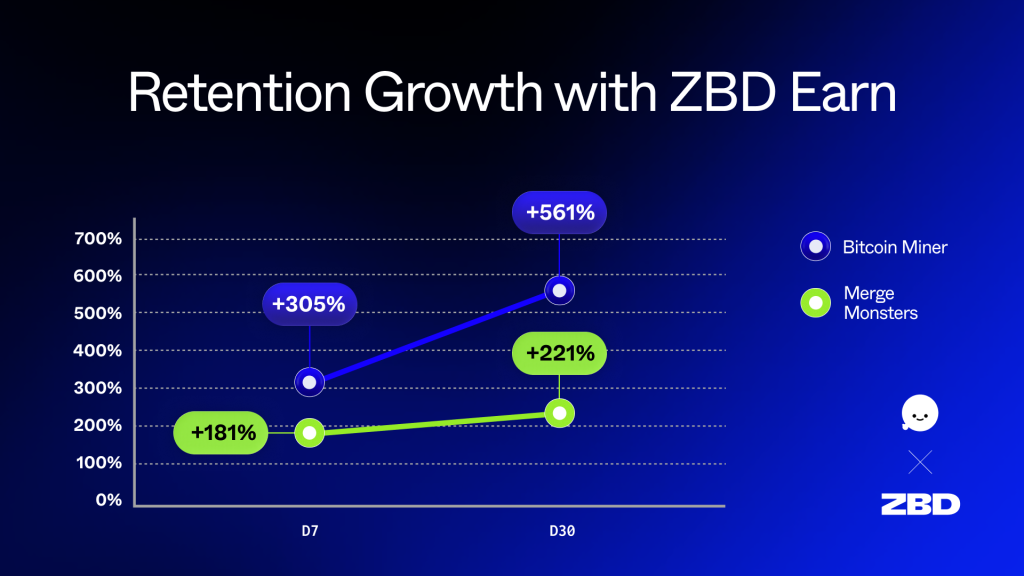
    Typically the first metric to improve after introducing embedded rewards is retention. Titles including Fumb Games’ Merge Monsters and Bitcoin Miner saw significant improvements in retention when integrating ZBD Earn. 

    Check out the chart showing retention performance:

    Both games show significant retention gains from D7, with an even more pronounced lift at D30. Bitcoin Miner reached over 4x retention at D7 and more than 6.5x at D30, while Merge Monsters saw ~2.8x retention at D7 and 3.2x at D30. This points to a deeper impact on long-term engagement rather than short-term behavior.

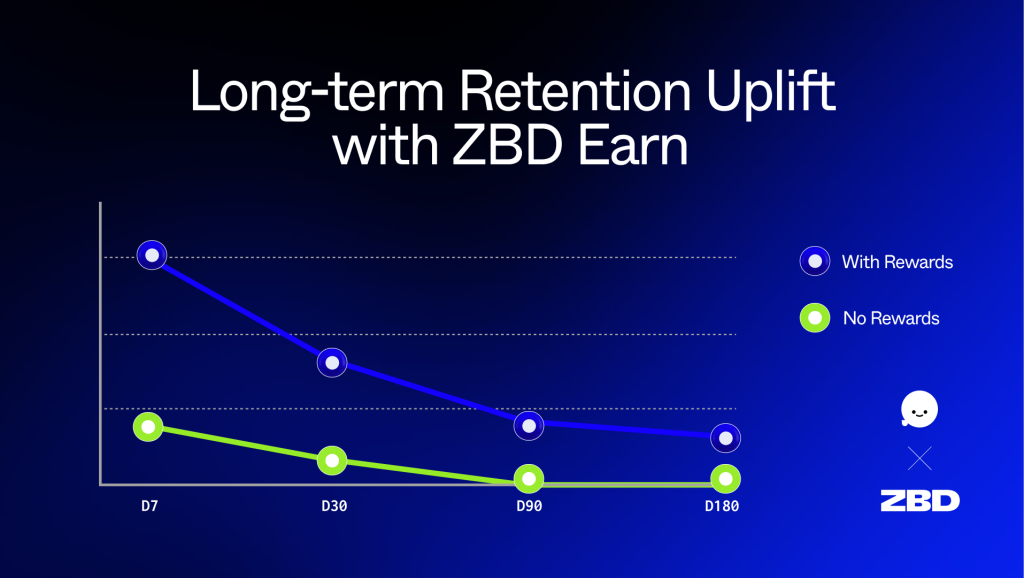
    Often, the impact of real money rewards extends even beyond D30. In one of the titles, the relative lift in retention persists through D180 with nearly 4% uplift compared to the baseline.

    So let’s take a step back, and look at the reasons why. Some in the industry, such as TapNation’s Philippe Lenormand, have described this shift as a move toward a value-for-time economy. Users know their attention has value. And games know it too. To win their attention, games need to be compelling. Tying gameplay to real-money rewards gives users FOMO; they know if they stop playing, they’re leaving real money on the table. When a user’s in-game progress is tied to a real money reward, the opportunity cost of leaving increases. Embedded rewards build loyalty by aligning player time with value for both players and developers, creating a strong win-win scenario. 

    What follows? Engagement and monetization improve

    Retention improvements naturally evolve into deeper engagement within the game. When users retain better and session frequency and duration increase, they interact more with the core gameloop and monetization systems. As a result, ad interactions see a boost too.

    There is also a behavioral shift. Instead of feeling like interruptions, ads and engagement triggers start to feel reciprocal. Users are participating in a system where their time and attention generate real-world value.

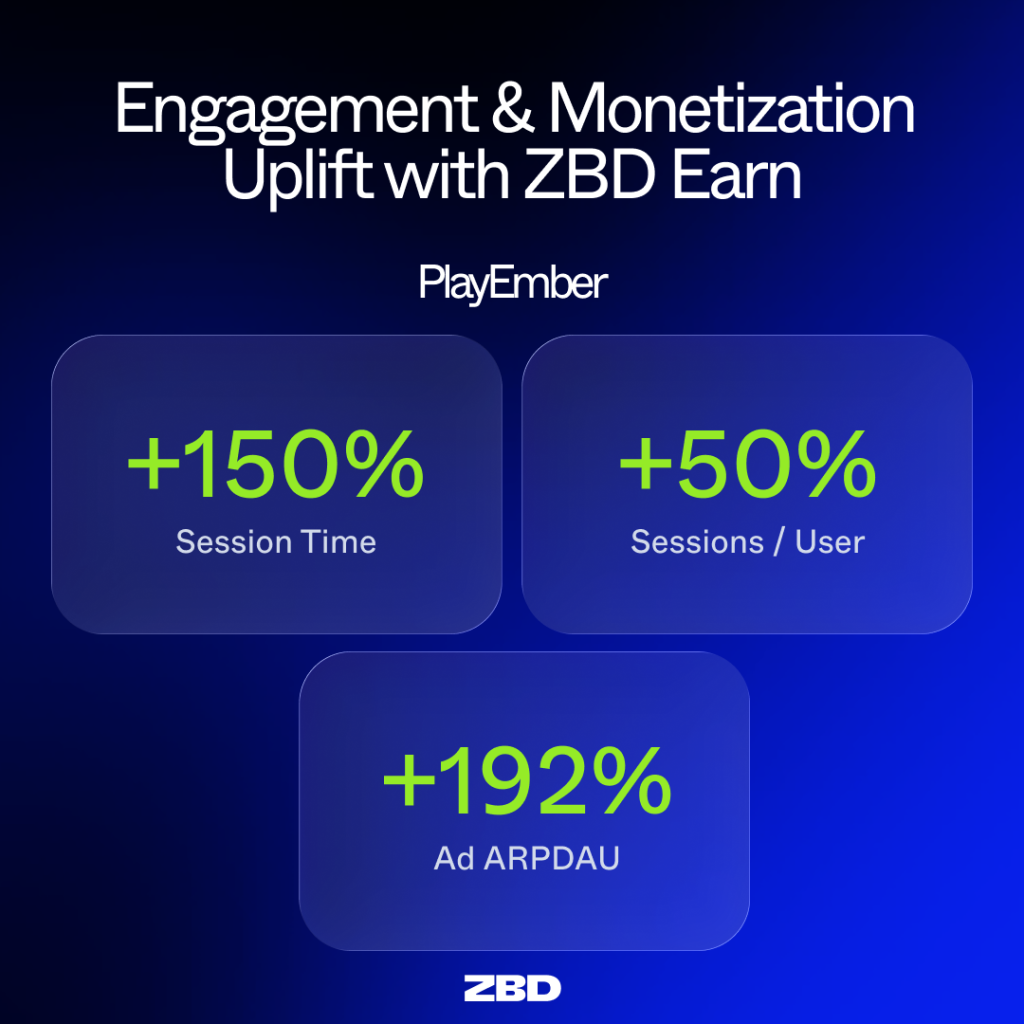
    The result is measurable improvements across engagement and monetization metrics, as seen in one of PlayEmber’s titles, where session time increased 2.5x, sessions per user rose 50%, and ad ARPDAU grew ~2.9x.

    When users are more engaged, they naturally watch more ads, retain better, and progress deeper into the game. Monetization becomes more effective because engagement has improved.

    How it creates a compounding effect 

    The most significant impact of embedded rewards happens when multiple metrics improve. Individually, each improvement is meaningful, but together they compound into larger gains. 

    In Merge Monsters, stronger retention increased the number of active users. Longer sessions increased ad exposure. Higher engagement improved monetization performance. The end result was a meaningful increase in LTV to fuel the game’s growth.

    Embedded rewards can also influence in-app purchase behavior, like it did for a popular idle game by one of our partners. When embedded rewards were added, there was a 4.3x increase in IAP.

    How embedded rewards fit into the growth flywheel

    Retention, engagement, and monetization move together. When one improves, the others follow, creating a feedback loop that strengthens game growth deeper into the funnel.  

    Embedded rewards plug directly into that loop. By tying gameplay actions to real-world value, they encourage more frequent play, longer sessions, and stronger loyalty. They’re also highly configurable. Studios can tailor rewards to different player segments, acquisition sources, or engagement levels, ensuring the system supports existing marketing and monetization strategies instead of disrupting them.

    The result is stronger retention, higher engagement, and better monetization, driving higher LTV per player. When LTV increases, everything else shifts. Studios gain more control over how fast and how far they can scale, including UA becoming more efficient with ROAS improvements.

    Embedded rewards can be applied across games and publisher portfolios of all sizes and can integrate with existing UA and monetization stacks without disrupting core systems. 

    Curious how embedded rewards could fit into your game’s growth loop? Reach out.

  • Q and A with Hajar Noreddine

    Q and A with Hajar Noreddine

    What can payment providers learn from great game design? Quite a lot, according to Hajar Noreddine, VP of Business Development at ZBD. In this Q and A, she reflects on the unexpected career turn, the importance of designing fintech with empathy, and why the gaming industry sometimes hesitates to experiment with new models, even when the opportunity is clear.

    1. Name a game you love, and one thing payment providers could learn from it.

    One game that really stayed with me is The Last of Us. Beyond the gameplay, what makes it powerful is how intentional and emotionally driven every decision feels. There’s no unnecessary complexity, everything exists to serve the player’s journey.

    That’s something fintech can learn from: design with empathy first. Too often, payment products are built around features instead of real human experiences. Great games guide players through complex systems without overwhelming them. Financial tools can do the same. If players can navigate intricate worlds and master layered mechanics, users can absolutely manage sophisticated financial flows, as long as we design with empathy and clarity first.

    2. Tell us about a career curveball or moment that really impacted your journey.

    Not many people know this, but I entered ad-tech by accident. After graduating with a Business Administration degree, majoring in finance with a minor in Marketing, my plan was clear: build a career in finance or investment. It felt like the perfect mix of my love for mathematics and my people-oriented personality.

    While applying for finance roles, I took a temporary import/export job at a retail company. A month in, a friend told me about an opportunity in ad-tech. It paid better, so I treated it as a short-term move while continuing to pursue finance.

    What I didn’t expect was how much I’d enjoy it. The pace, the creativity, the blend of data and strategy, and the caliber of people in the industry… it all clicked. Before I knew it, I was turning down finance offers and leaned fully into this path. Ten years later, that “temporary” decision shaped my career in ways I never could have planned.

    3. If you could redesign one common industry practice — in gaming, fintech, or BD — what would you scrap immediately?

    I would scrap the fear of experimentation with new approaches.
    The games industry is changing incredibly fast, yet developers often stick to traditional growth methods, tools, and models, simply because they’ve worked in the past. Even when the data supports innovation, there’s still hesitation.

    From my experience, the companies that take educated risks are the ones that gain first-mover advantage and lasting user loyalty. Others end up following.

    This mindset is also why, for the first time in history, non-gaming apps surpassed gaming apps in revenue last year. I’ve seen that non-gaming companies tend to be more open to testing new tools, SaaS solutions, and business models. Innovation requires courage, and often, the highest returns come to those willing to try first.

    4. What’s an important topic the gaming industry isn’t discussing enough?

    Sustainability: both for players and developers. 

    We talk constantly about growth, revenue, and engagement, but not enough about long-term player trust and healthy monetization. Games shouldn’t just optimize for short-term wins; they should build ecosystems players want to stay in for years.

    The studios that will last are the ones that prioritize balance, transparency, and long-term player relationships.

    5. What’s something about ZBD’s direction or product evolution that genuinely excites you right now?

    I’d known ZBD for three years before joining, and like many in the industry, I initially saw it as a Bitcoin rewards company. That’s where it started, but the company has grown far past that. Embedded rewards – with payouts in any currency – are just a slice of the end-to-end payments stack that helps studios move beyond today’s fragmented approaches, and enables them to boost engagement in a way we’ve never seen before.

    After joining, I was genuinely impressed by the depth of ZBD’s capabilities and the products they’ve been building for studios and publishers. We’re working on things that haven’t been introduced to the gaming industry before, across mobile, PC, and console.

    As a gamer myself, I can confidently say, these are solutions that the industry actually needs. ZBD isn’t just following trends, we’re working to make money movement inside games feel like a natural part of the experience, and helping shape what the future of gaming could look like for both gamers and developers.

    6. What’s a misconception the gaming world has about fintech, and vice versa?

    Gaming often sees fintech as rigid, slow, or disconnected from player experience. On the other hand, fintech sometimes views gaming as “just entertainment” rather than a sophisticated economy with deeply engaged users.

    In reality, both views miss the point. Gaming understands engagement and retention at a level most industries can’t match, while fintech excels at infrastructure and scale. When those strengths combine properly, they unlock entirely new experiences for users inside digital ecosystems.

  • ZBD Earn: Boosting LTV with Embedded Rewards

    ZBD Earn: Boosting LTV with Embedded Rewards

    Mobile games have spent the last few years looking for new ways to grow in an increasingly  constrained and competitive environment. Most studios today are leaning on two main approaches.

    The first is the growing use of direct-to-consumer (DTC) monetization. Some major studios and publishers now attribute 39% of revenue to web shop sales. The margin upside is clear, but these strategies tend to concentrate value among users who were already inclined to spend.

    Another approach is Rewarded User Acquisition (RUA), which encompasses many different forms including offerwalls, an in-game placement where users complete actions to earn virtual currency and rewarded apps, third-party platforms where users can earn gift cards or money for playing games and completing actions within them. This incentivized traffic often comes with higher CPIs, but can yield users who play deeper and retain longer. However, the trade-off is that the rewards are only targeting new user cohorts and campaigns usually grant a fixed amount of rewards which can lead to drop off as users pivot to other games. 

    Rewarded play as an engagement tactic has grown in popularity over the years. According to Almedia’s Rewarded Returns Report, 77% of studios have already run a reward-based marketing campaign. What’s changing is how broadly they’re being used – moving from acquisition and one-off campaigns to the mainstream growth stack. And among users, the expectations are shifting too. ZBD research has shown that 70% of Gen Z now expect to earn rewards while using apps and playing games.

    With game growth under pressure and fewer titles able to scale through marketing alone, publishers are looking for growth levers that can make a larger impact in boosting performance  across their entire active user base. 

    ZBD Earn is a new approach that supports this strategic shift by embedding rewards into games and strengthening engagement of all users.

    Introducing ZBD Earn

    ZBD Earn is a fully embedded rewards solution designed to increase LTV and other key growth metrics. It allows studios to integrate rewards directly into gameplay to drive higher retention and engagement while being a value-add layer to the game’s user experience.

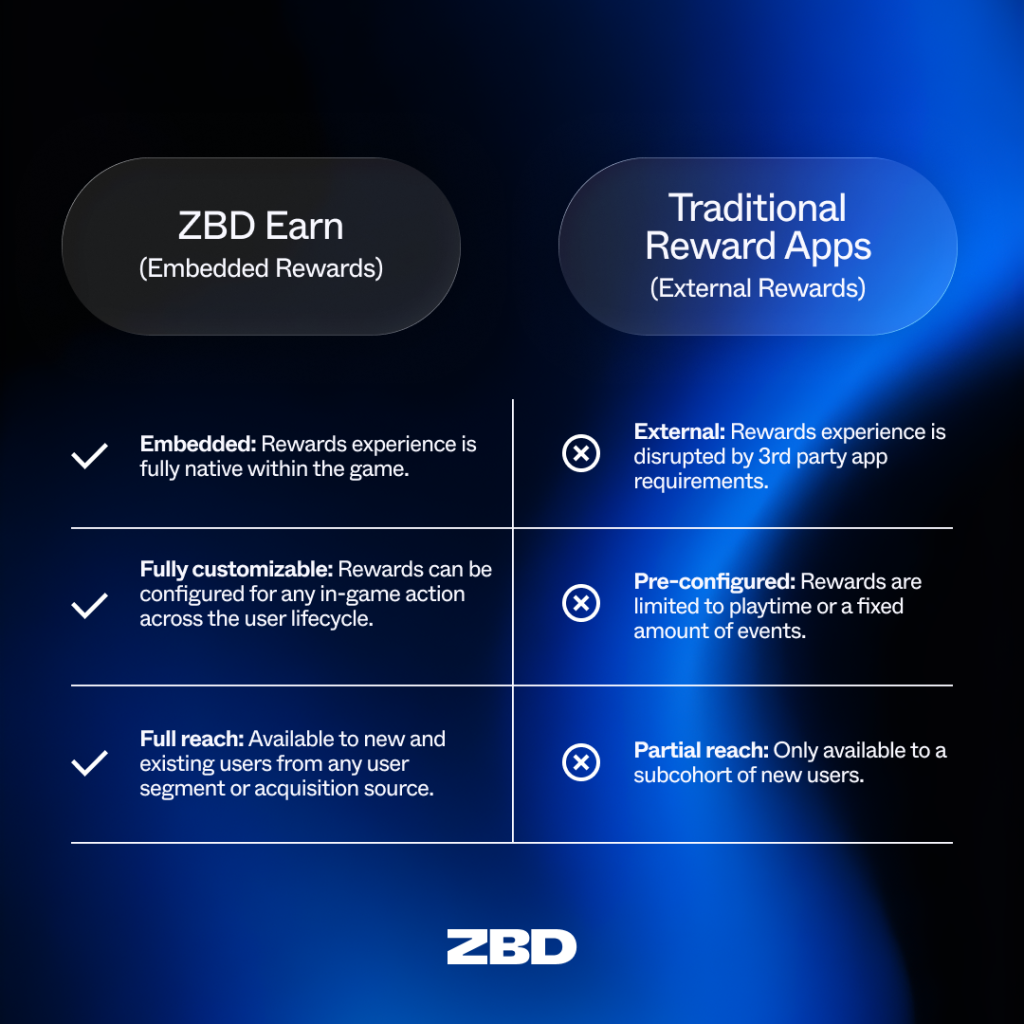
    Unlike external reward systems that require users to download third-party apps to activate rewards, ZBD Earn operates entirely inside the game. Studios have full control to configure rewards for all users at every stage of the user lifecycle, ensuring that rewarded engagement can be customized based on user segments, acquisition source, and other parameters. 

    Internally, we describe this approach as: ‘Rewards for All’. We’ve seen that rewards work best when they apply across the entire user base. This doesn’t mean blindly rewarding users just for showing up, but that every user has the opportunity to earn relative to their engagement. By tying rewards into meaningful actions, studios enhance retention and other important KPIs like session duration, ad view rates and LTV for everyone.

    The difference isn’t just who gets rewarded, but where and how rewards appear. When rewards are native to gameplay and tied to long-term progression, they strengthen the user experience instead of interrupting it or feeling bolted on.

    For rewards to work across different genres and game designs, flexibility is essential. Rather than being limited to a narrow set of predefined actions or time-bound mechanics, ZBD Earn aims to empower publishers to craft a truly native rewards experience. Studios can set rewards around any in-game action – including FTUE progression, completing levels, winning matches, maintaining a login streak, or participating in live ops events. By linking rewards directly to key parts of the core gameplay loop, studios can boost engagement, ultimately increasing retention and monetization to drive LTV. 

    Studios also control how rewards are presented inside the game. Depending on the theme, rewards can appear as in-game currency (like gems, stars, coins, etc.) or as fiat and digital currencies. Plus, the UI/UX modules are fully customizable for seamless integration with the game’s brand.

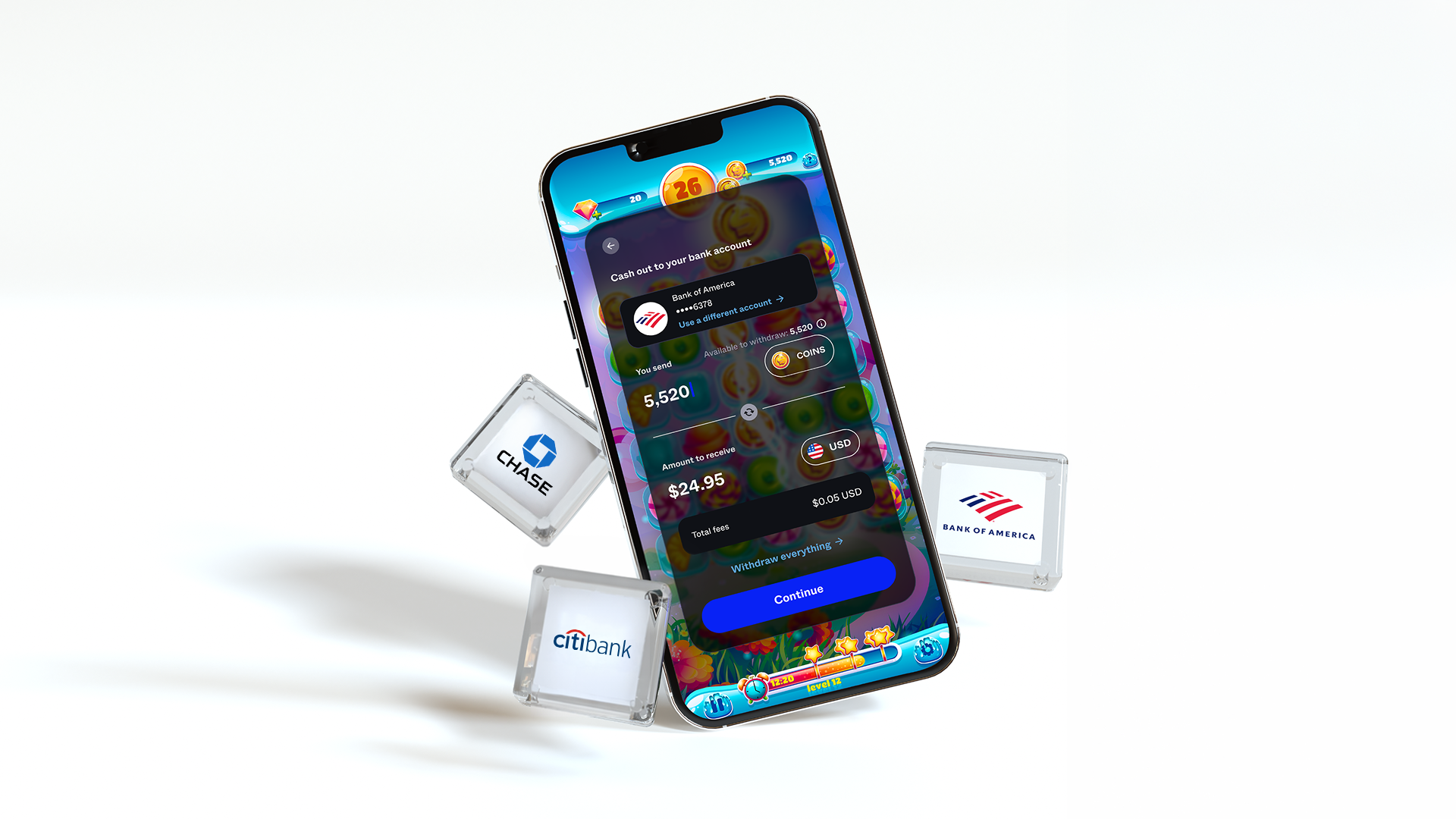
    ZBD Earn supports instant rewards at any denomination, down to fractions of a cent, making it practical to reward recurring individual in-game actions instead of just large milestones. Earnings are credited in real time and users can withdraw to their preferred destination, including Cash App, digital wallets, Gift Cards, the ZBD App or, soon, bank accounts. For studios, all of this is handled behind the scenes, so there’s no payments or compliance overhead to manage.

    Integration of ZBD Earn is handled through a Unity-based ZBD SDK, which adds around 2 MB to the final build.

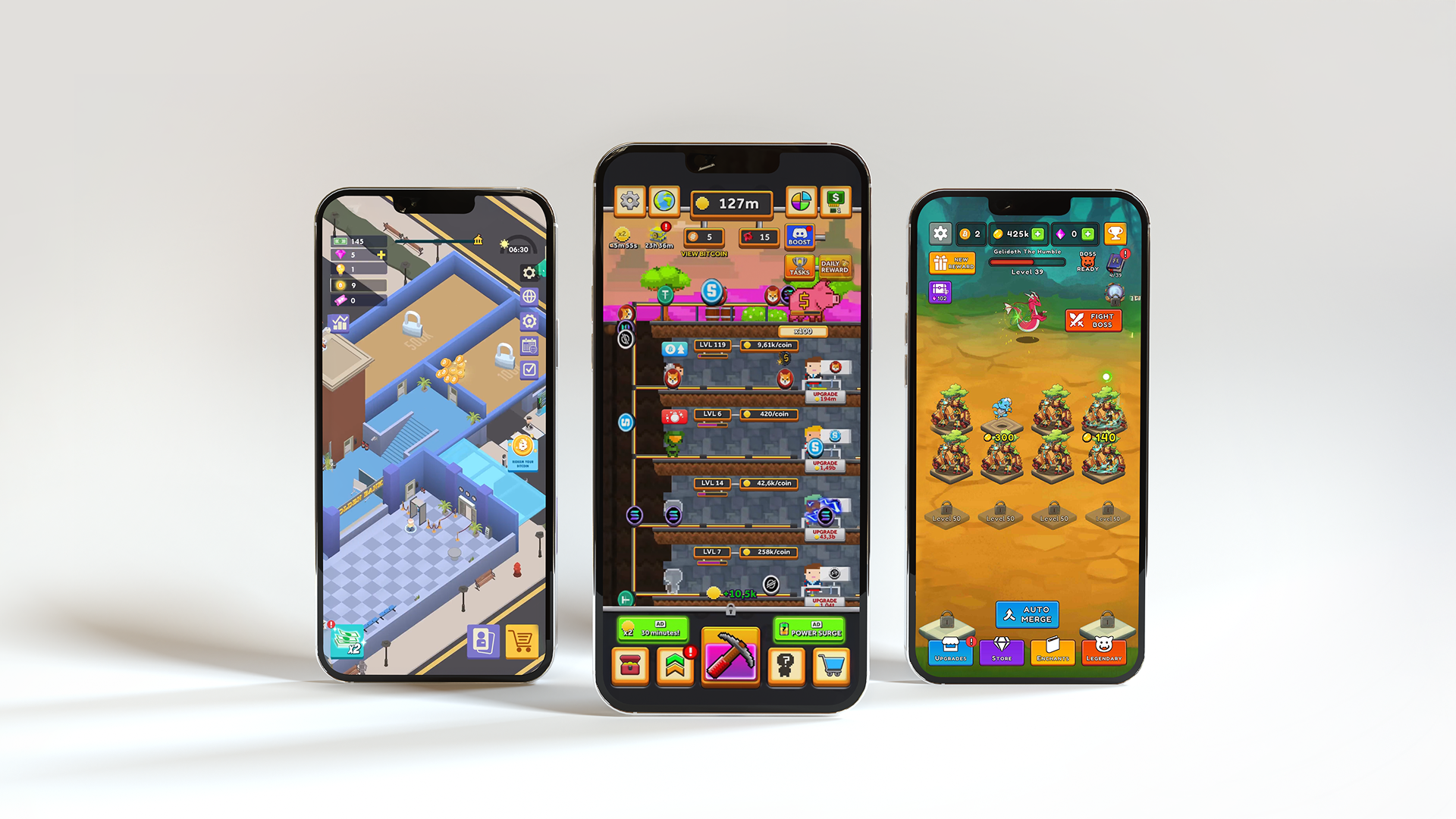
    TapNation’s Idle Bank is a good example of how natively embedding rewards can be a powerful growth lever. Because the core gameplay revolves around managing banking operations, the reward experience was a natural fit as users earned coins with real-money value as they played.

    Embedded rewards inside TapNation’s Idle Bank.

    After integrating ZBD Earn, TapNation’s game experienced:

    • +142% ARPDAU uplift
    • +28.5% Day 1 Retention
    • +44.5% Day 14 Retention


    ZBD Earn vs. Other Reward Models

    How ZBD Earn Fits Into Your Growth Strategy

    ZBD Earn is designed to uplevel a game’s whole userbase, and can be highly effective to grow ARPU and LTV – reshaping how users retain, engage, and spend over time. Across every stage of the lifecycle, ZBD Earn improves retention by accelerating early progression of new users, increasing engagement from non-spenders, and sustaining long-term activity among the most high-value users and spenders.

    To date, the ZBD SDK has integrated into more than 50 games, across a variety of genres and monetization strategies. Studios have seen particularly strong metrics in hybrid monetization and ad-monetization games as higher engagement directly correlates to more ad impressions. 

    A common concern is whether real-money rewards mechanics eat into revenue. ZBD Earn doesn’t cannibalize IAP or ad-based revenue. In fact, by retaining users longer and rewarding them along the way, incremental increases to LTV and revenue are achieved. Game studios leveraging ZBD Earn have seen that sharing 10-20% of revenue with users can grow total monetization by 80-200%.

    Where Embedded Rewards Tend to Have the Biggest Impact

    Embedded rewards work across genres and monetization models from hyper-casual and idle games to mid-core and live-ops heavy titles. For example, we consistently see strong results in a few common scenarios. Soft-launched games that show promising early results but struggle to scale beyond initial cohorts often benefit from improved retention and session depth across the full user base. Legacy titles are another strong fit, where embedded rewards can re-engage users and extend the tail of the game without any new content investment. Similar effects appear in mid-core games with steeper learning curves, where rewards help reduce friction and early drop-off. Ultimately, any title looking to increase retention, engagement, or monetization can layer in ZBD Earn.

    Getting Started with Embedded Rewards

    This embedded rewards solution is built for games and studios of all sizes. ZBD Earn can help whether you are managing newly launched titles or looking to extend the tail of established games. 

    ZBD also offers affiliate revenue to studios who drive traffic to the ZBD App.

    Read our full Integration Guide here.